What does Front loop and Back loop mean in crochet?
Have you come across a pattern which mentions about working in the Front Loop Only (FLO) or Back Loop Only (BLO) in crochet and wondered what it means? Don’t worry! It’s not as difficult as it sounds!
Anatomy of a crochet stitch
So, firstly we need to know the basic anatomy of a stitch, so, when we are instructed to work into a specific part we know what that means..
Here we have a little swatch of Treble crochet (UK terms) / Double crochet (US terms)
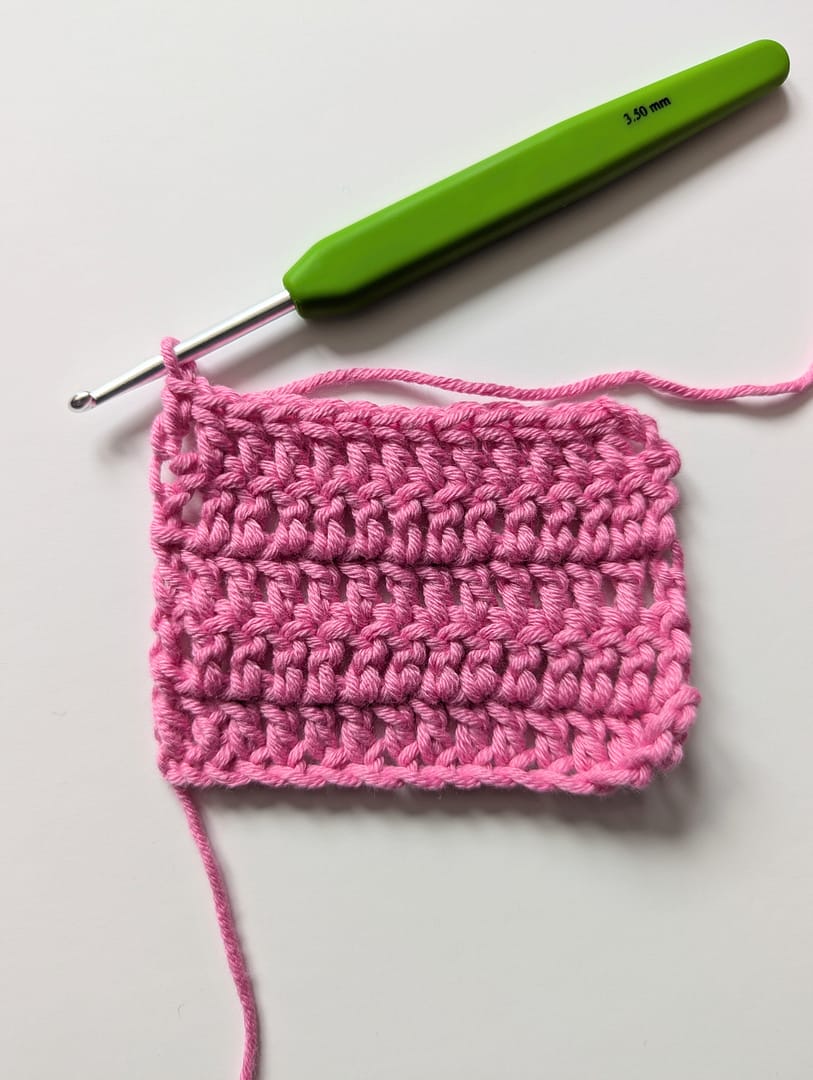
Now, let’s look at the rows a little closer…. I’ve turned the piece to start a new row
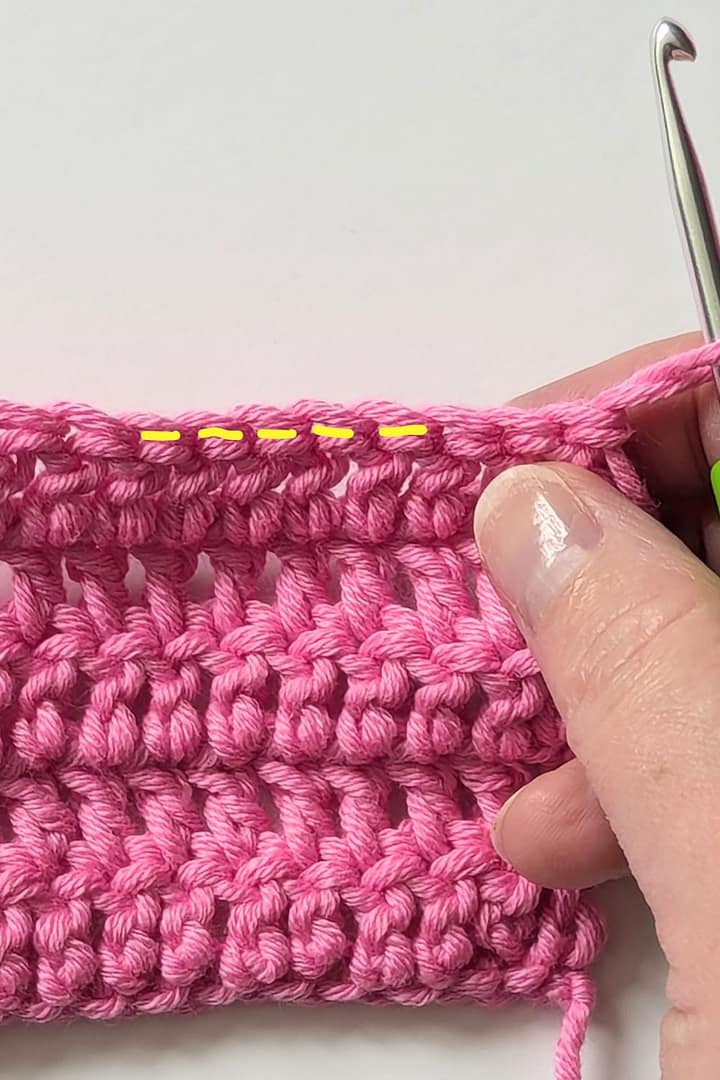
You can see on the photograph, where the yellow lines are, is where you would normally insert your hook to work the next row of stitches, underneath the ‘v’ at the top
If we twist the fabric and look at the top you can see the ‘v’ stitch that you would normally work under…
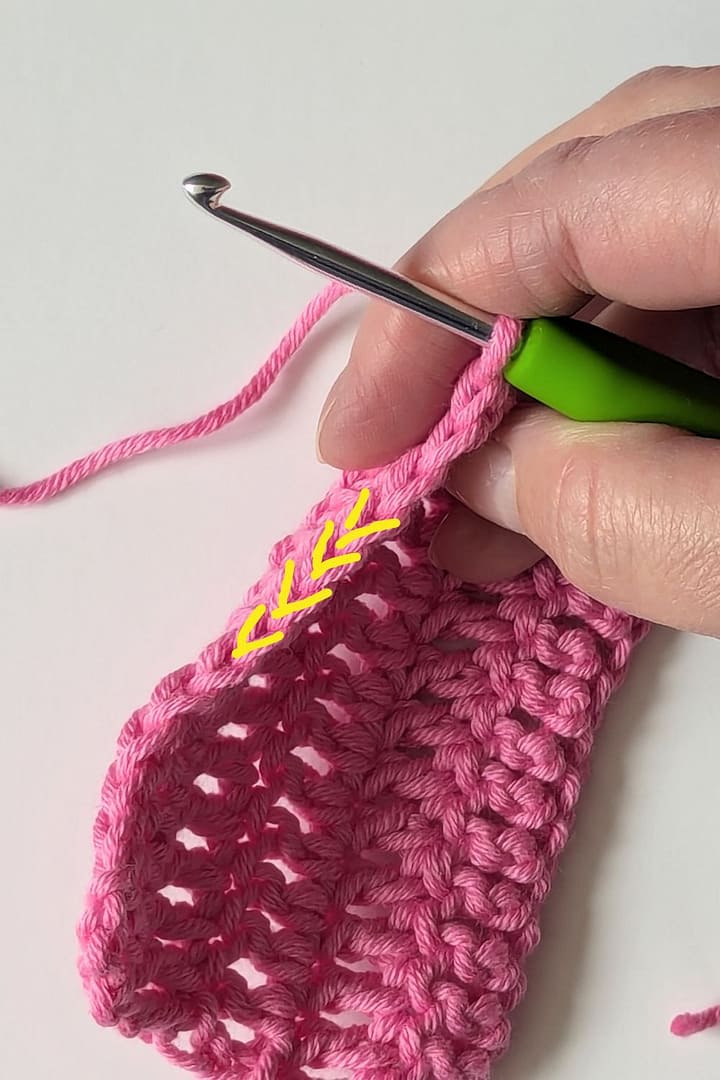
I’ve drawn some of the ‘v’ stitches here in yellow. The ‘v’ is created from what is referred to as the Front and the Back loop
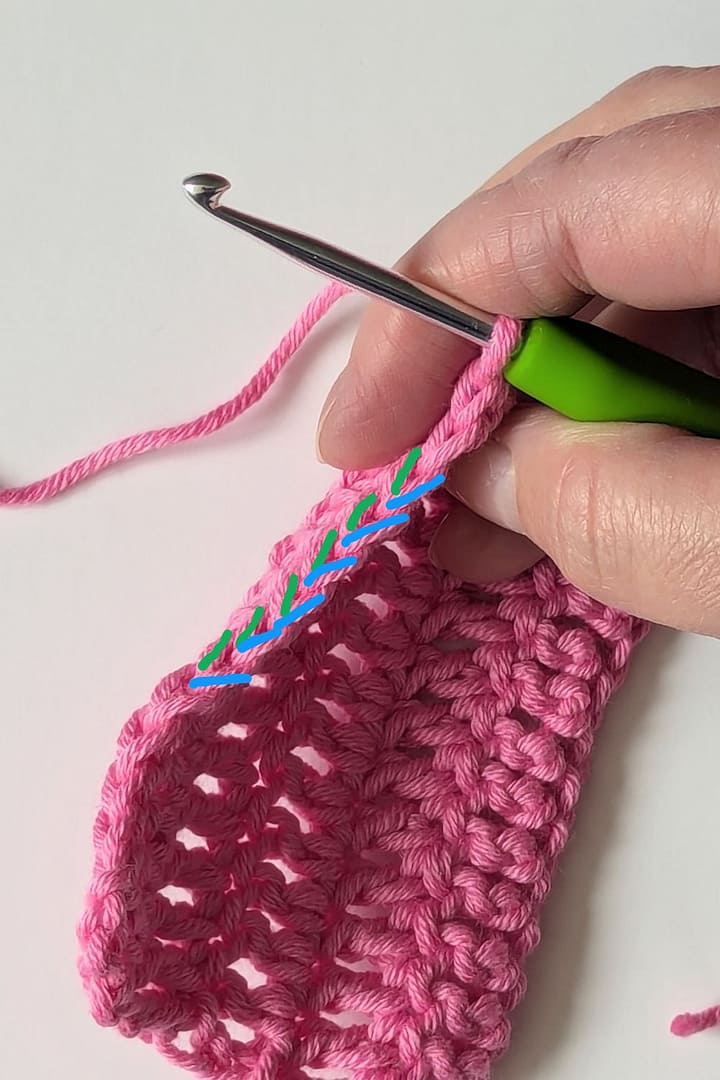
This is the same photo of the same ‘v’ stitches, however, I’ve shown the Back loops in Green and the Front loops in Blue. Basically the Back loop is the line of the ‘v’ furthest away from you as you crochet across the row, and the Front loop is the line of the ‘v’ closest to you as you crochet across the fabric, it is all just different parts of the same stitch.
Working a traditional stitch
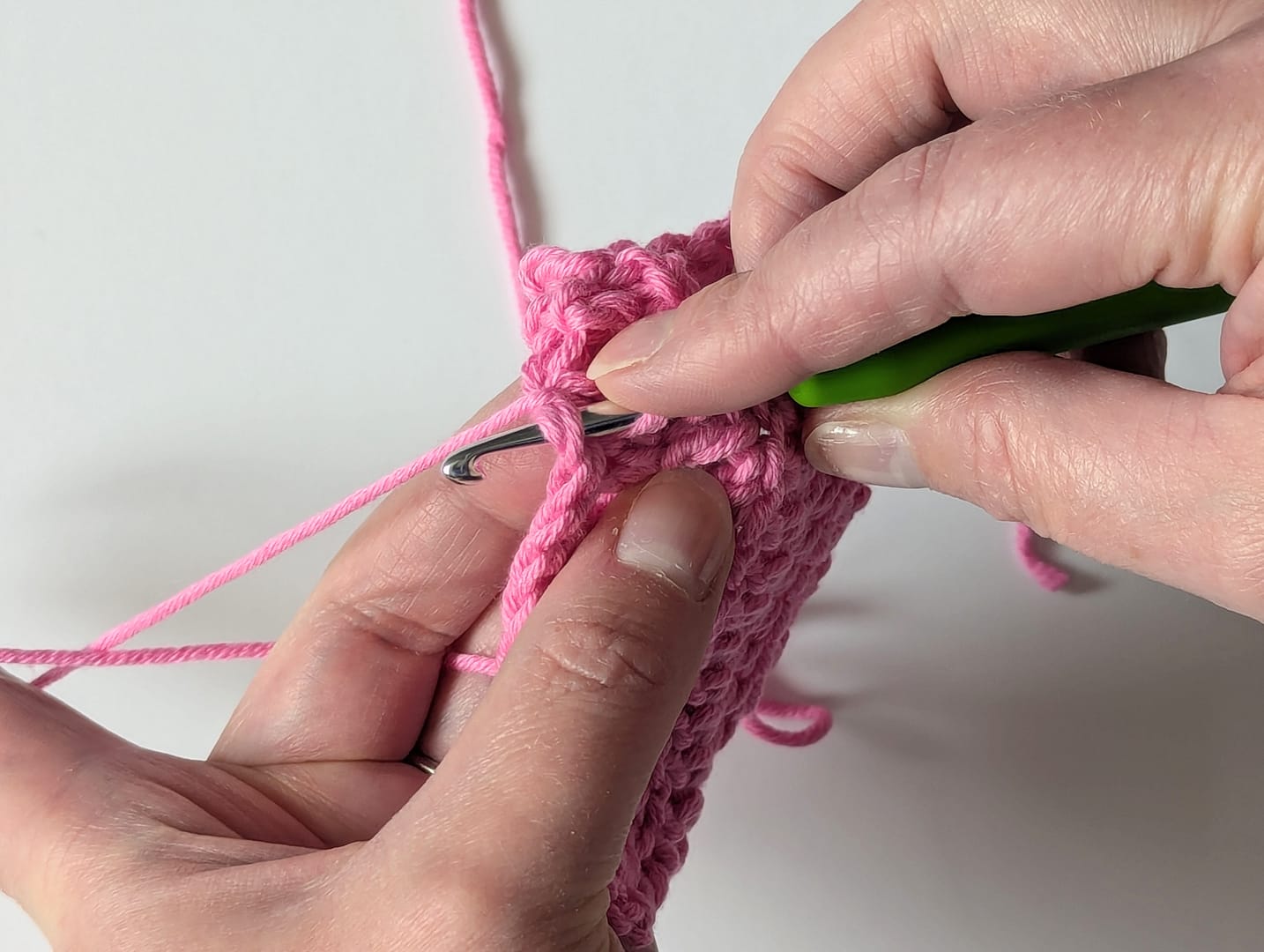
So, just to be clear, when making a traditional stitch, e.g. I have made this sample with Treble crochet (UK terms) / Double crochet (US terms), the hook is inserted under the ‘v’ stitch and therefore under both the Front and Back loops of the stitch, like so (I have made a yarn over first and then inserted the hook for this particular stitch):
Working in the Front Loop Only (flo)
So, now, if we want to make the same stitch, BUT, into the Front Loop only, we do everything the same, APART from we insert the hook under the Front Loop (the line in blue in the picture above) and the hook comes out in the middle of the ‘v’
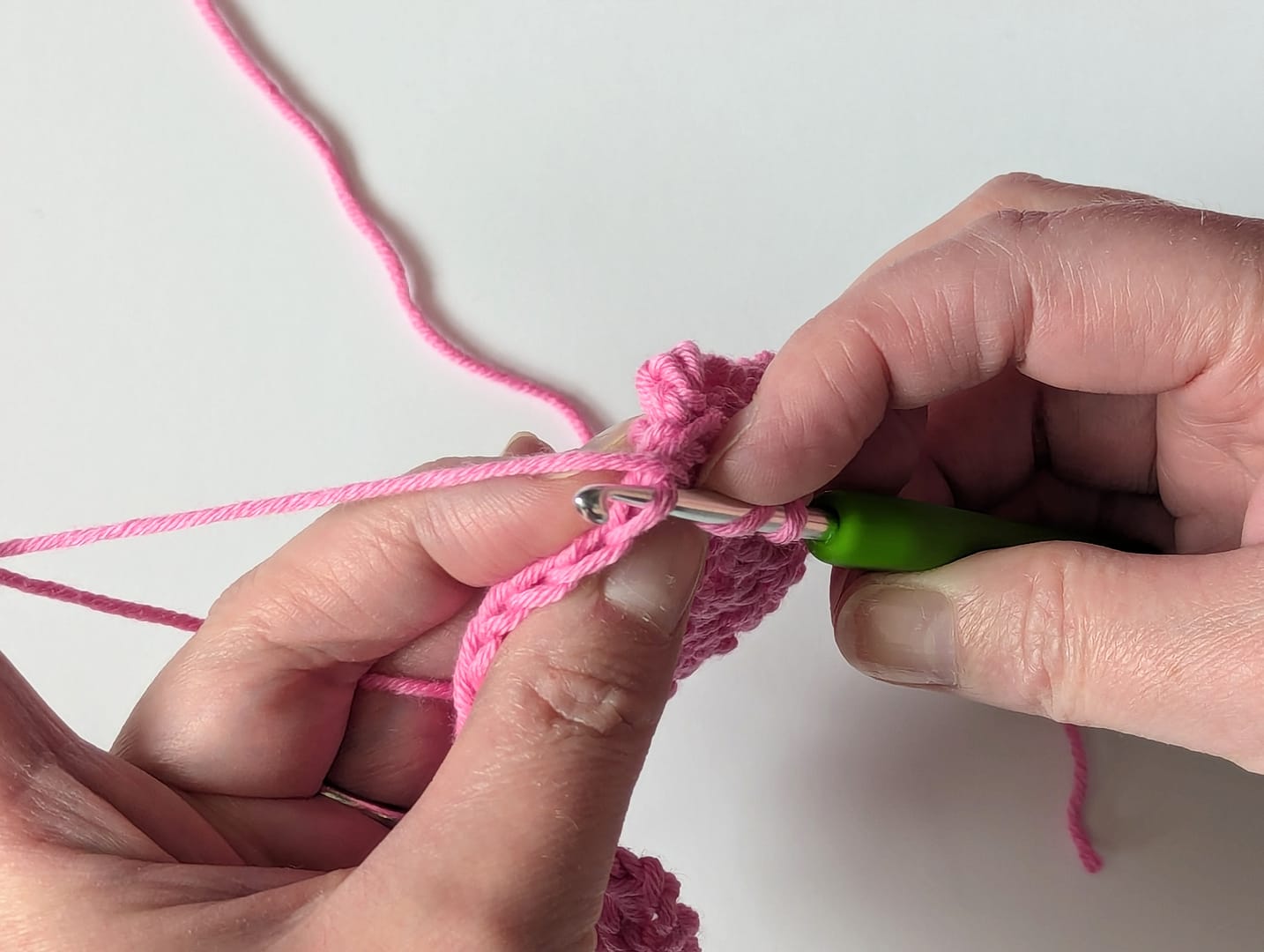
Everything else for that stitch is worked in exactly the same way as you normally would
Working into the Back Loop Only (blo)
Therefore, when making a stitch into the Back Loop only, again everything about the stitch is worked in the same way, APART from the hook is inserted under the Back Loop of the ‘v’ stitch only (the Green line in the picture above). So the hook goes into the centre of the ‘v’ and then comes out the back of the ‘v’ like a traditional stitch
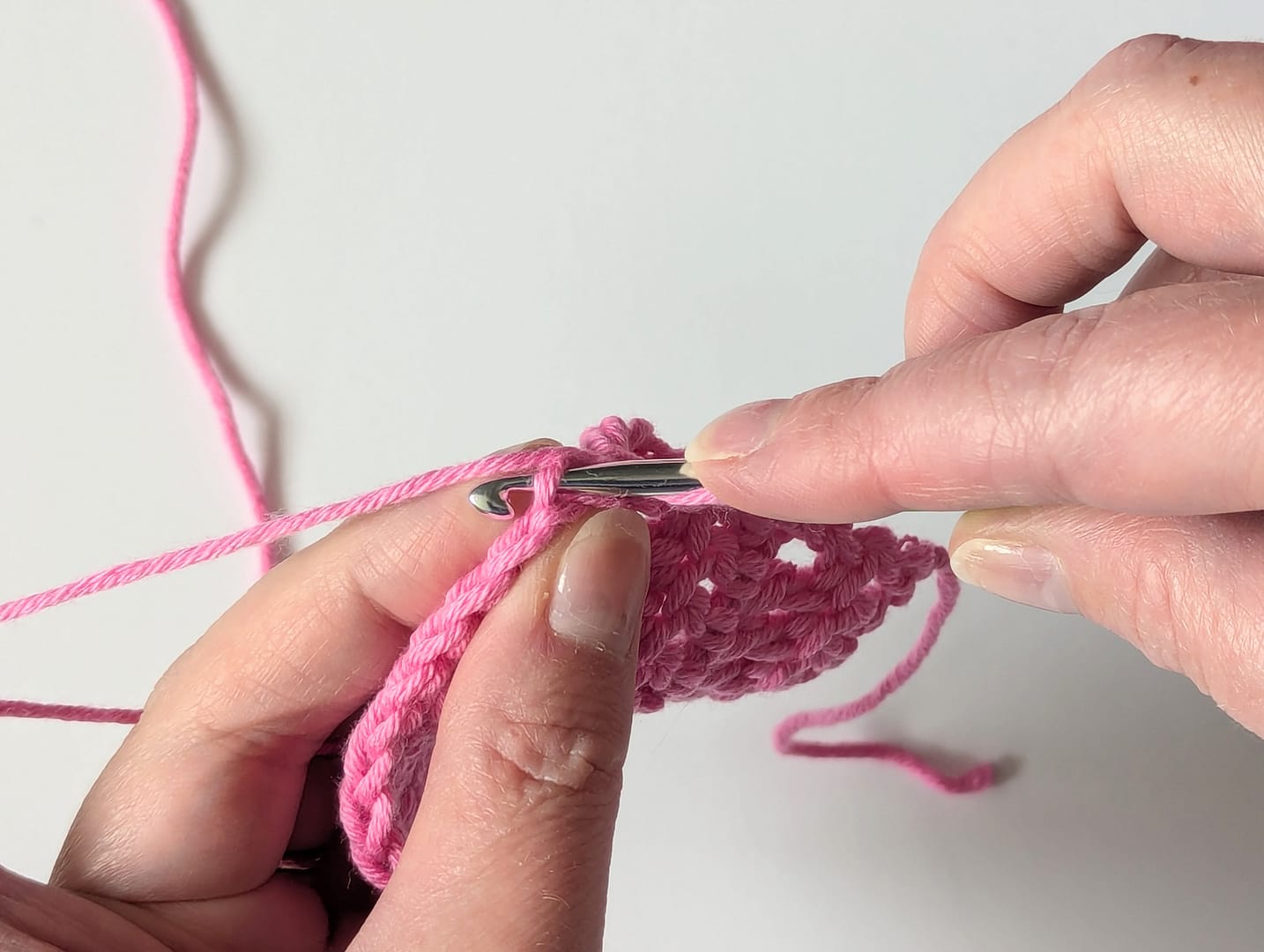
And again, you work the rest of the stitch as you normally would.
See, not that scary after all!
Hopefully that’s helped and made it lovely and clear for you!
Why work into the Front Loops and Back Loops at all?
Ok, so now you know how to work those stitches, but just in case you were wondering why the pattern is telling you to make those stitches let me explain…
It’s all about shape and texture
Working into just the Front or Back loops will create a slightly different texture.
If we make a piece of fabric working into the Front loop only (here still with Treble crochet (UK terms) / Double crochet (US terms)), it will create a texture like this:
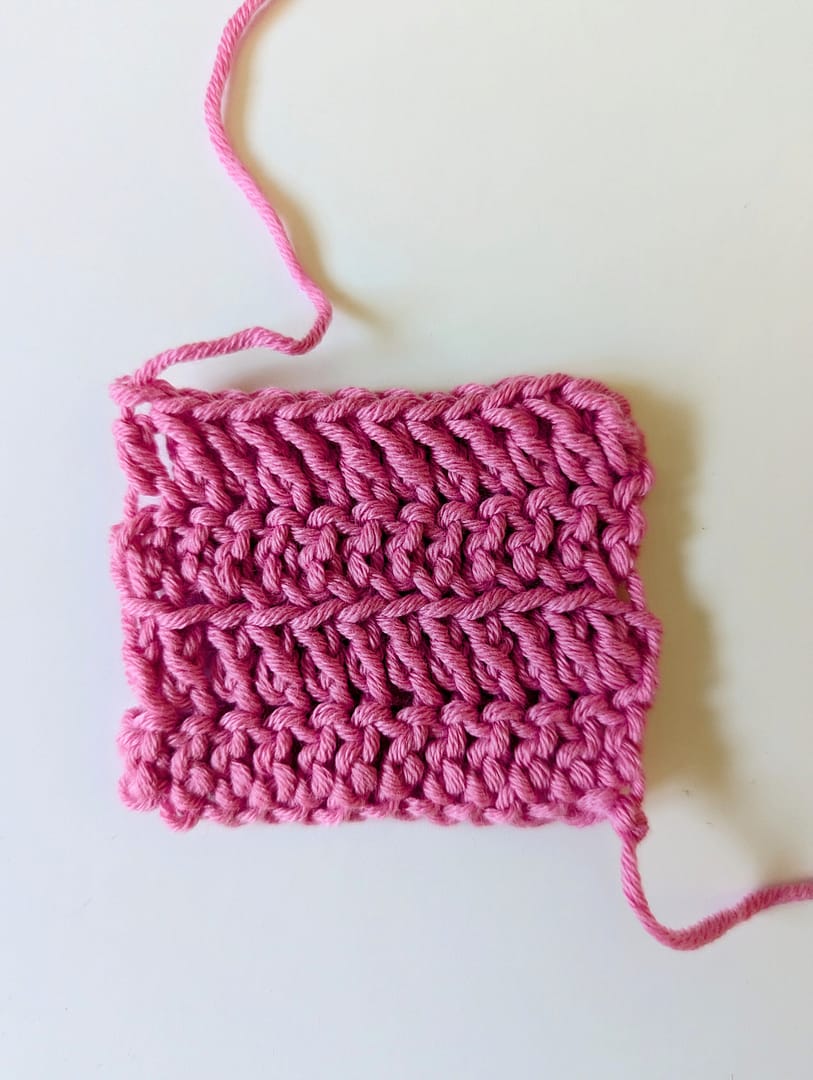
It creates a lighter fabric, and although is in essence it is the same as the traditional stitches it creates a slightly new and interesting texture.
Working in the back loop only, in rows, will create a piece of fabric like this:
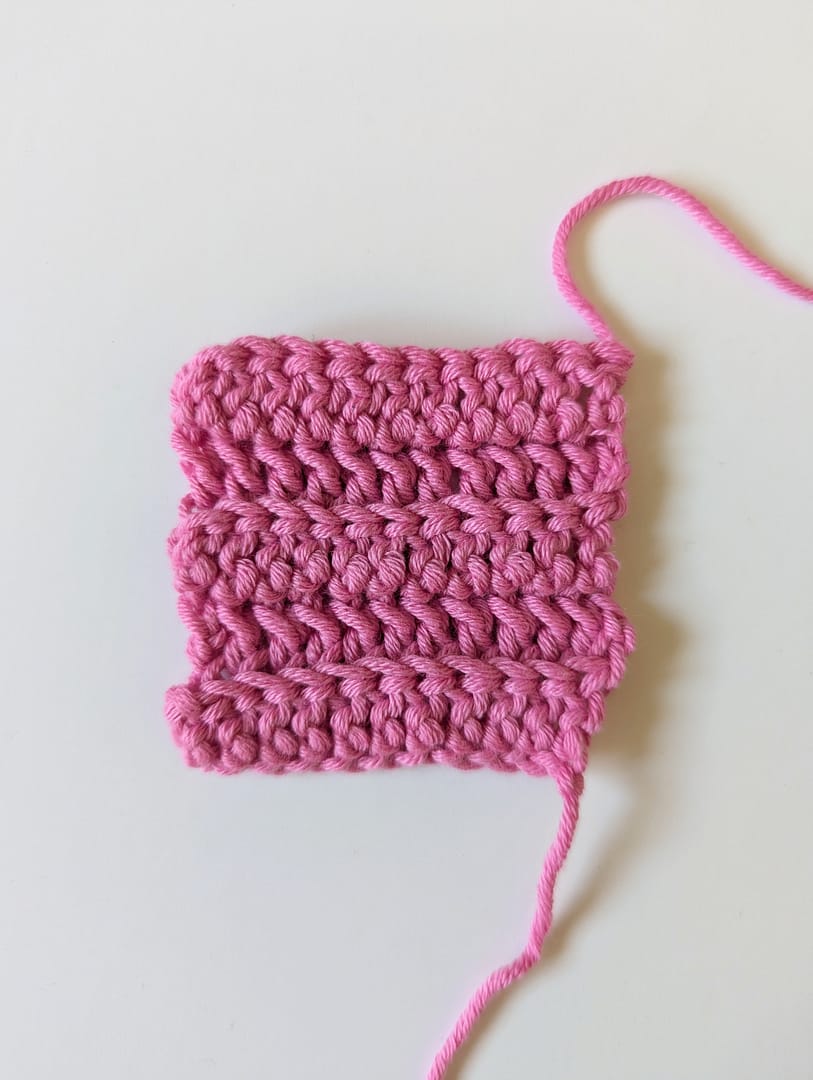
This creates almost like a ribbing texture and I have made gloves and mittens with this fabric for the wrist section. The fabric is slightly softer and slightly more stretchy.
Working through the Front loop only and the Back loop only will create ridges with the loops that are left unworked.
This can be used to your advantage if you want to create a ridge or a line in your work, e.g. for decoration.
Also, the unworked loops can be used for sculpture, i.e. other pieces can be attached to your fabric using the unworked loops.
Or when making 3D items such as my pencil pot / crochet hook pot. When I have finished working the base I work through the back loop only to create the turning point and then continue for the cylinder section.
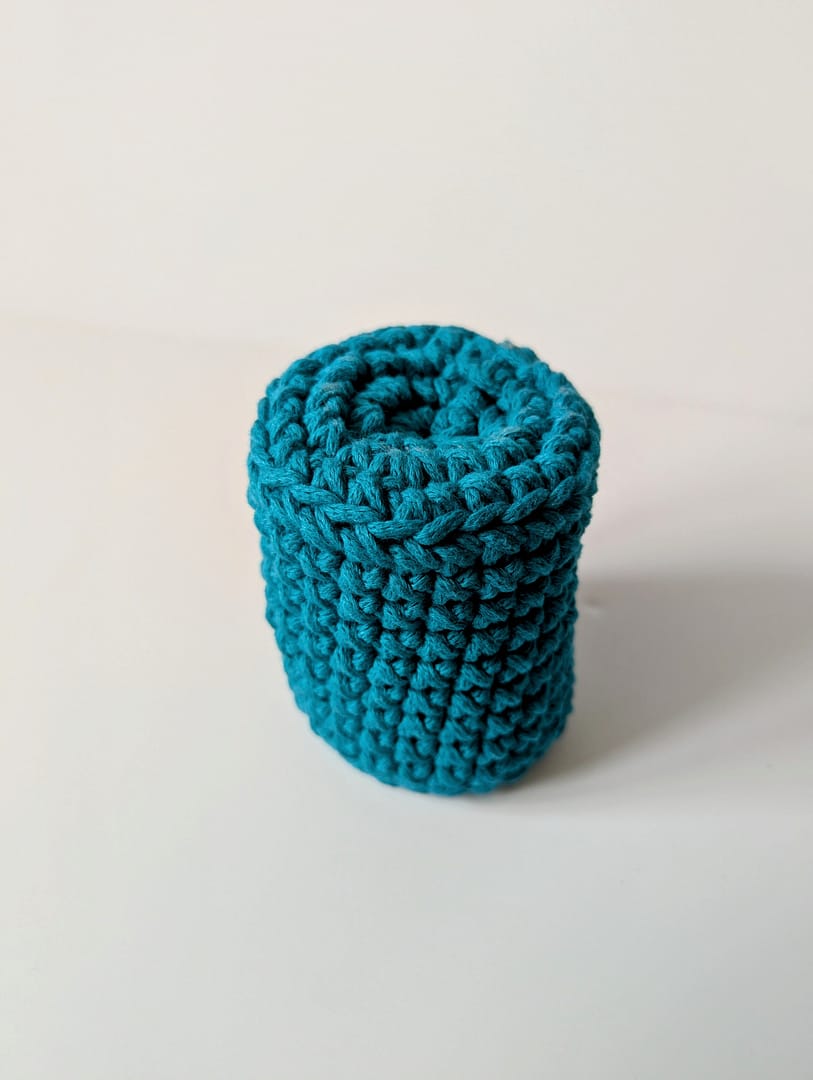
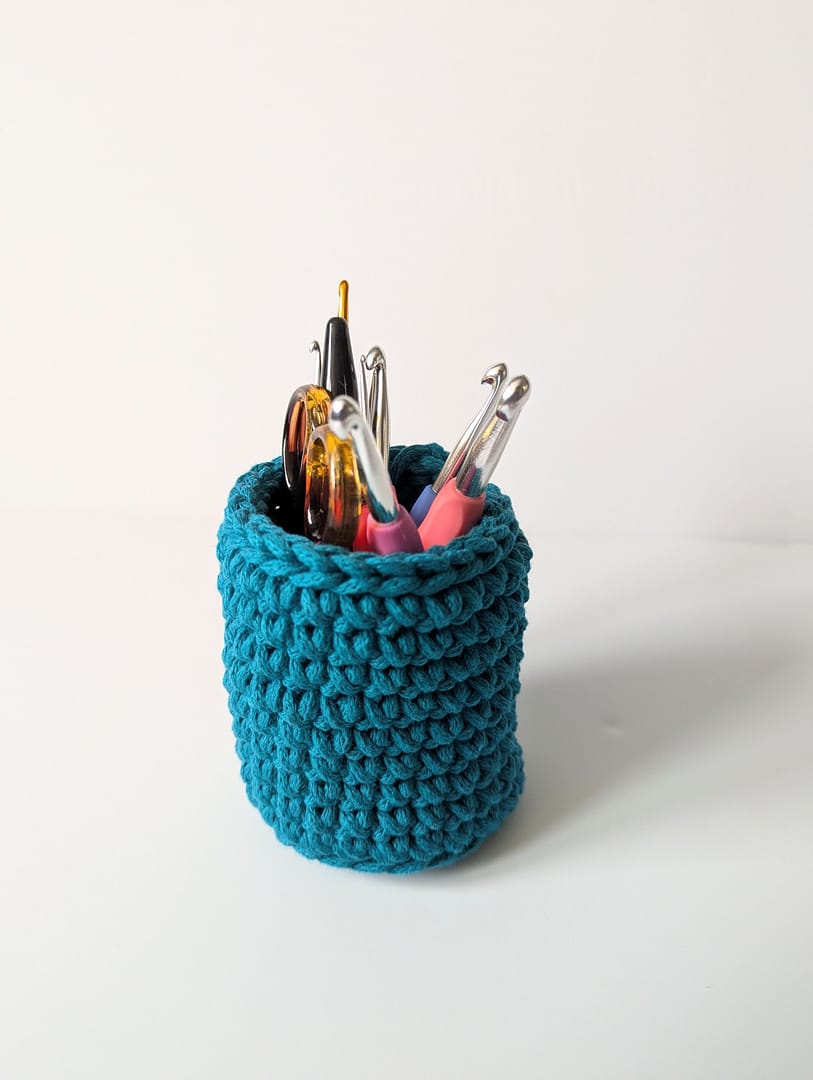
I think the most important thing is to have a play with these stitches, see what you can create working into the different loops – that’s the fun part!
Hopefully that helped and happy crocheting!!